Restoration service · 24/7 emergency response
Structural Drying
Structural drying is the process of removing moisture from a building's structure, walls, floors, and framing after water intrusion, using air movers, dehumidifiers, and continuous moisture monitoring. The goal is a verified dry standard, not just a dry surface. Call now to start professional drying before hidden moisture takes hold.
What this service involves
Drying is measured, not guessed
After extraction removes the visible water, the structure itself is still wet: water soaks into drywall, wicks up framing, sits in wall cavities, and collects under flooring. That hidden moisture is what structural drying removes, and it can only be done correctly with the right equipment and daily measurement.
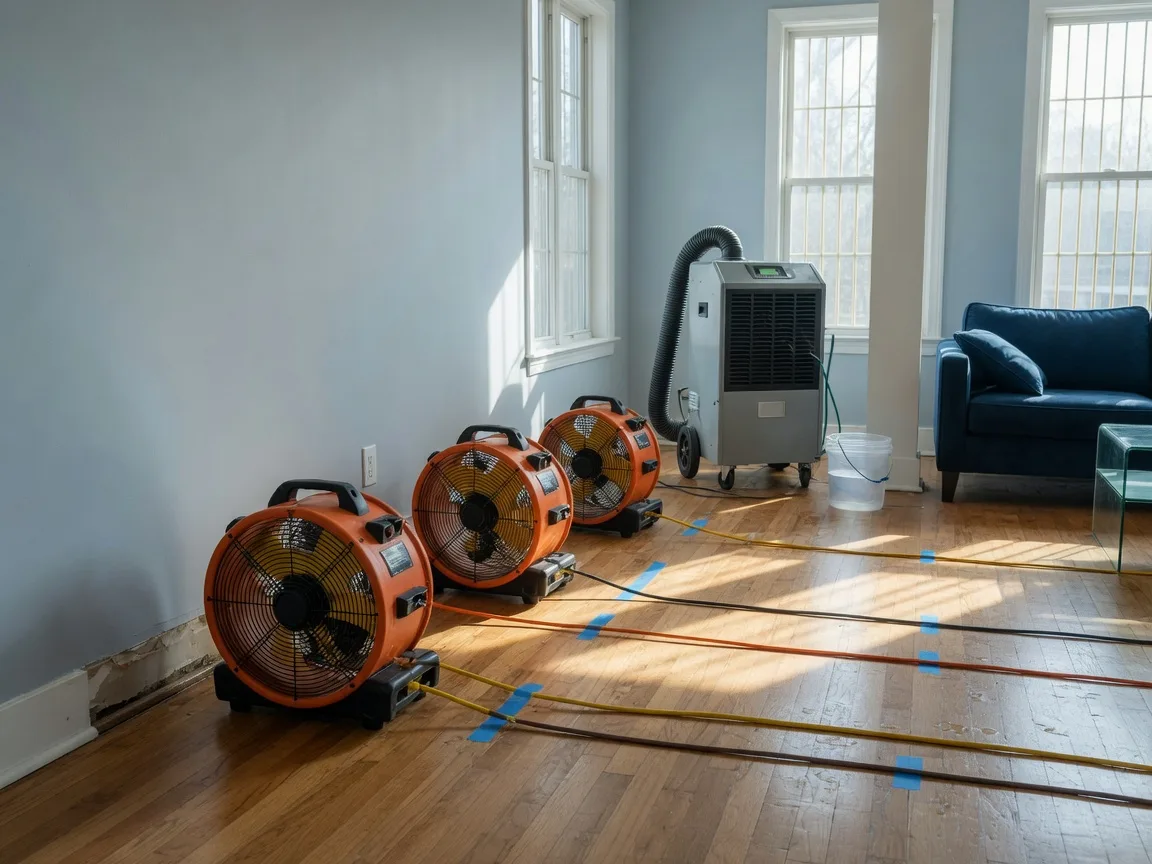
A proper drying setup places high-velocity air movers along wet surfaces and dehumidifiers to pull vapor from the air, creating the conditions for moisture to leave materials at a manageable rate. Technicians measure moisture content daily in the wood, drywall, and concrete, and only call the job dry when the numbers confirm it, which is exactly what insurers expect to see documented.
- Air movers and commercial dehumidifiers
- Wall cavity and subfloor drying techniques
- Daily moisture readings with instruments
- Drying to a documented dry standard
- Protects flooring, framing, and drywall
What a professional structural drying job includes
Air mover placement
High-velocity fans are aimed along wet walls, floors, and ceilings to speed evaporation.
Dehumidification
Commercial dehumidifiers pull moisture from the air so drying is effective, not stagnant.
Moisture monitoring
Daily readings track drying progress across affected materials.
Hidden moisture detection
Moisture meters and thermal imaging find water inside walls and under floors.
Dry standard report
Final readings confirm the structure is dry to industry standards for your claim.
The process
How structural drying works at Metro
From the first call to the final check, every job follows the same disciplined sequence.
- 01
Baseline readings
Technicians measure the moisture content of affected materials before drying begins.
- 02
Equipment staged
Air movers and dehumidifiers are placed to dry the structure efficiently.
- 03
Daily monitoring
Moisture and humidity levels are tracked and equipment adjusted as drying progresses.
- 04
Dry standard confirmed
Final measurements verify the structure is dry before equipment is removed.
When to call
When should you call about structural drying?
Call for structural drying after any significant water event, even after the visible water is gone. If walls, flooring, or framing got wet, hidden moisture remains and needs professional drying.
(248) 617-0738- Drywall, insulation, or framing was soaked by water
- Flooring got wet from above or below
- You can see water stains or feel dampness in walls
- A previous clean-up left materials damp
Straight answers
Structural Drying questions, answered directly
How long does structural drying take?
Most structural drying jobs take three to five days, but the timeline depends on how much material is wet, what it is made of, and the category of water. Drying continues until instruments confirm a dry standard, not a set number of days.
Can I dry a wet wall with household fans?
Household fans move air but do not remove water from wall cavities or lower indoor humidity the way dehumidifiers do. Hidden moisture can remain and cause damage later, which is why professional drying includes measurement and dehumidification.
What does 'dry standard' mean?
It is a measured moisture level, defined by industry standards and material-based baselines, that indicates the structure is dry enough to be safe and ready for repair. Reaching it is verified with instruments, not by touch or appearance.
Emergency assistance
Need structural drying help right now?
Active water damage moves fast. One call connects you with the restoration response available in your area.
(248) 617-0738 / 24/7 emergency assistance